
Europe’s Secret Corners: Places You Won’t Find on Every Itinerary
Europe is brimming with iconic sights – the Eiffel Tower in Paris, the Colosseum in Rome, the canals of Venice. But there’s another Europe, the one that whispers its secrets to those willing to wander off the beaten path.
These are the hidden gems most travelers miss: towns that seem frozen in time, villages that tell stories through their walls and cobblestones, and landscapes so breathtaking you’ll swear you’ve stepped into a dream.
Traveling beyond the crowds is like opening a secret door. You trade the selfie lines and bus tours for quiet streets, the smell of fresh bread from a local bakery, and the unhurried rhythm of everyday life.
Here are some of Europe’s best-kept secrets that will make you fall in love with the continent all over again.
Český Krumlov, Czech Republic – A Fairytale by the River
Imagine wandering along a river where swans glide silently across the water, past pastel-colored houses that lean into each other as if sharing secrets. Český Krumlov, in southern Bohemia, is that kind of place.
The cobbled streets curve unexpectedly, leading you to cozy cafés tucked behind flower-filled windows. At the heart of the town, the castle rises like a fairy tale fortress, its walls whispering stories of knights, merchants, and centuries gone by.
Unlike Prague, bustling and often overwhelming, Český Krumlov feels timeless. In the early morning, mist rises from the Vltava River, and the only sounds are church bells and your own footsteps echoing off the ancient stones. It’s a place where you can truly slow down, linger over coffee, and watch the town awaken in gentle hues of pink and gold.
Albarracín, Spain – A Hilltop Masterpiece
Spain is known for its sun-soaked beaches and flamenco nights, but tucked away in Aragon lies Albarracín – a town that seems painted by an artist with a whimsical hand.
Terracotta houses cling to steep hillsides, their narrow streets twisting in ways that make every corner a new discovery. The medieval walls encircle the town like a protective embrace, and the views from the ramparts stretch endlessly over pink and green hills.
Here, time slows. You can spend hours wandering aimlessly, discovering tiny squares where locals gather, pausing to watch children chase one another, or simply soaking in the surreal serenity of a place largely untouched by tourism. Few travelers know of Albarracín, but those who find it discover a side of Spain that feels private, personal, and unforgettable.
Giethoorn, Netherlands – The Venice of the North
Imagine a village without roads, where life flows along quiet canals, and the soft dip of an oar is your soundtrack. Giethoorn is exactly that – a hidden gem where bicycles and boats replace cars, and thatched-roof houses peek from behind flowering gardens.
Here, mornings are misty and calm, with ducks paddling lazily along the canals and bridges arching gracefully overhead. Afternoon strolls take you past small shops and cafés, where locals greet you warmly, and evenings are so serene you can hear your own heartbeat.
Visiting Giethoorn is less about sightseeing and more about slipping into a slower, gentler rhythm of life.
Civita di Bagnoregio, Italy – The Dying Town That Lives in Your Heart
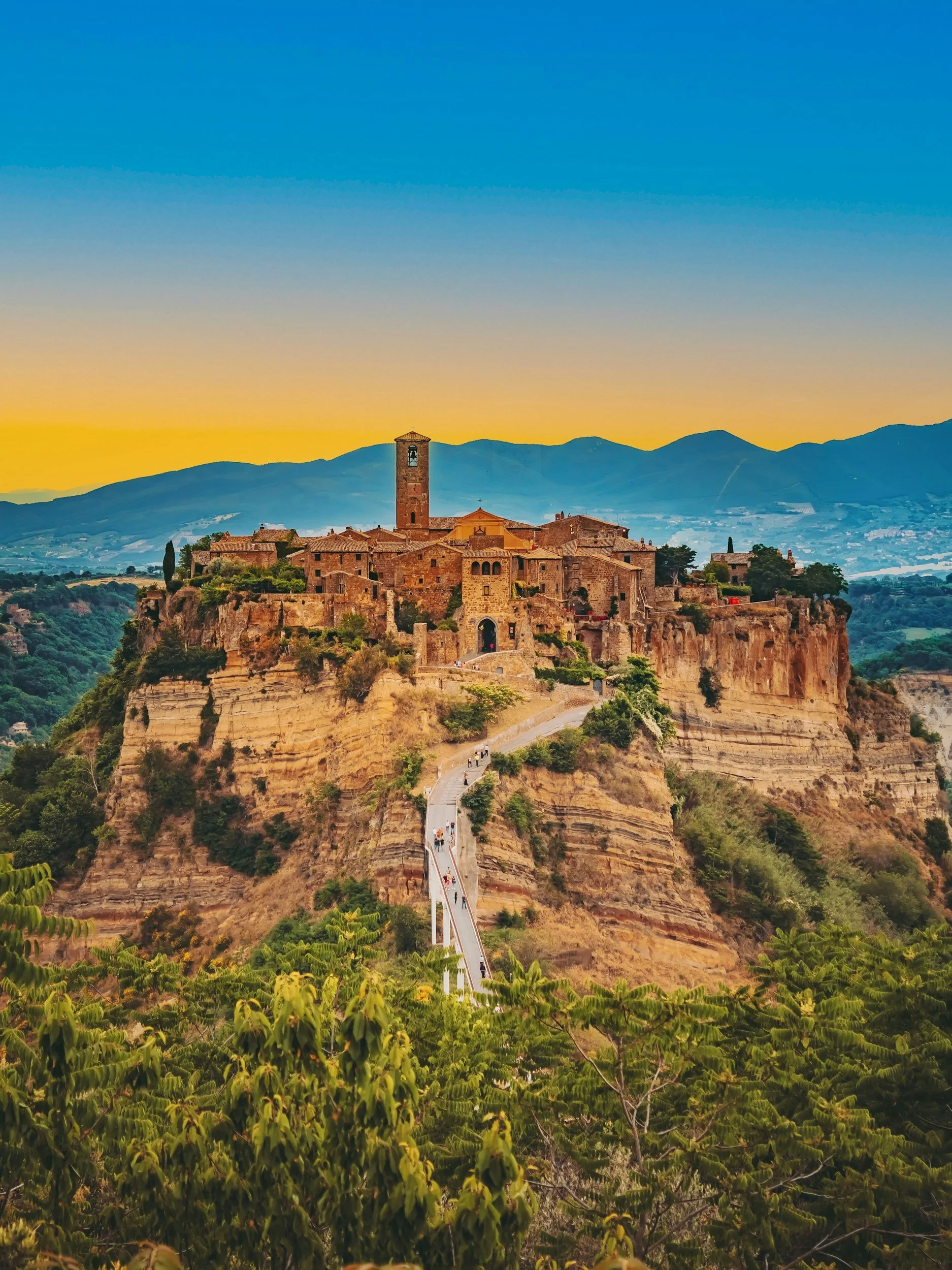
Italy is famous for Rome, Florence, and Venice, but Civita di Bagnoregio is a secret you almost don’t want to share. Perched on a crumbling hilltop in Lazio, this village is slowly eroding into the valley below, giving it the haunting nickname “the dying town.”
Accessed by a narrow pedestrian bridge, Civita feels like stepping into another world. Narrow alleyways, ancient stone houses, and tiny piazzas create an intimate setting that’s impossible to forget. At sunset, the warm light paints the town golden, and the views of the surrounding valleys are nothing short of magical.
Visiting Civita is a reminder that some of Europe’s most precious gems require a little patience – and a sense of wonder.
Kotor, Montenegro – A Medieval Treasure by the Sea
Tucked into a fjord-like bay along Montenegro’s Adriatic coast, Kotor is a town that seems to defy time. Its medieval walls climb the surrounding cliffs, winding past old fortresses, while the harbor reflects the crumbling palaces and terracotta rooftops like a perfect painting.
Kotor’s labyrinth of streets is dotted with quiet squares, hidden churches, and family-run cafés. Most tourists rush to Dubrovnik, just a few hours away, but Kotor’s charm lies in its quiet authenticity – a place where history lives in every stone, and the sea whispers stories of centuries past.
Valletta, Malta – Tiny Island, Big Surprises
Perched on a rocky peninsula overlooking the sparkling Mediterranean, Valletta is a city that feels both grand and intimate. Its fortified walls, built by the Knights of St. John, rise dramatically from the sea, guarding a labyrinth of narrow streets that hide centuries of history. Walking through the city, you’ll pass elegant Baroque palaces, ornate churches, and quiet squares where locals sip coffee under the shade of centuries-old balconies.
Valletta may be compact, but it rewards curious travelers at every turn. Climb the steep, hidden stairways for panoramic views of the harbor, where fishing boats bob alongside luxury yachts, or slip into one of the tucked-away cafés to savor traditional Maltese pastries and a strong cup of coffee.
Botanical gardens perch unexpectedly on rooftops, offering quiet corners with spectacular sea views. And while the island itself draws crowds to its sun-drenched beaches, Valletta’s charm is in its subtle surprises – a hidden fountain here, a centuries-old statue there, a moment of quiet magic in a bustling city.
Vilnius, Lithuania – Baroque Beauty in the Baltics
Vilnius is a city that wears its history like a patchwork quilt – layers of medieval streets, baroque architecture, and modern creativity blending seamlessly. Its Old Town, a UNESCO World Heritage site, is a maze of cobbled streets, hidden courtyards, and colorful baroque churches that seem to appear around every corner. Here, the unexpected is part of the charm: a small café behind a Gothic archway, a quiet square shaded by centuries-old trees, or a street mural peeking out from between centuries-old buildings.
Even just strolling slowly through the quiet streets, you’ll feel the city’s rhythm – the sound of church bells mingling with the chatter of locals in outdoor cafés, the scent of fresh pastries wafting from small bakeries, and the occasional burst of music from an open window.
Vilnius may not appear on every European itinerary, but for travelers who take the time to explore it, the city offers a rich, layered, and utterly enchanting experience that lingers long after you’ve left.
The Charm of Europe’s Secret Corners
Traveling to Europe’s hidden corners is about connecting with the essence of a place: the crisp air of a misty morning in a quiet alley, the laughter of children echoing through cobblestone streets, the quiet moments when the world slows down.
These are the places that stay with you long after you return home. They’re the stories you tell your friends, the photographs that don’t quite capture the magic, and the experiences that make you fall in love with travel all over again.
Next time you plan a European adventure, don’t just tick off the landmarks. Seek the hidden gems. Wander, get lost, and let the continent surprise you.
Whether you want the must-see highlights or the hidden gems only locals know, we at Trabeona Travels will craft a journey that combines the best of both worlds, creating experiences you’ll never forget.